Members
Meet our community
Current Members
Steering Committee
Director
Eric Racine
Dr. Racine is a renowned researcher in bioethics, specializing in neuroethics and pragmatic ethics. Author of Pragmatic Neuroethics: Improving Treatment and Understanding of the Mind-Brain, he focuses on the lived experience of ethically problematic situations, resolved through deliberative processes. He is the Director of the Pragmatic Health Ethics Research Unit and a Senior Research Professor at IRCM and the University of Montreal. Dr. Racine is also a member of the Canadian Academy of Health Sciences and has received several honorary distinctions.
/
Caroline Favron-Godbout
Caroline recently completed her PhD in bioethics at the Université de Montréal. She conducted her doctoral research under the supervision of Dr. Eric Racine at the Pragmatic Health Ethics Research Unit. Her undergraduate studies were in biological sciences and neurosciences, and she completed a professional master’s in bioethics. Her research aims to co-develop, with key stakeholders, a guide for reflection and discussion on medical assistance in dying in the context of mental disorders. This project is financed by the Fonds de recherche du Québec and the RQSHA. Caroline aspires to place ethics at the heart of healthcare and the healthcare system, at the heart of research, but also at the heart of people’s everyday lives. Her vision is to make ethics accessible and meaningful to everyone.
In my view, adopting a living ethics stance is a promising avenue for making ethics accessible and meaningful to all. For me, a living ethics stance goes beyond respecting the diversity of experiences and perspectives: it seeks to welcome it. It encourages an open sharing of perspectives and the courage to engage in this sharing with curiosity, humility, and authenticity. A posture of living ethics—engaging, collaborative, rooted in complex realities, adaptable to diverse contexts, and open to dialogue—inspires me every day.
/
Arthur Filleul
Arthur Filleul is a French physiotherapist and doctoral candidate in Bioethics at the School of Public Health at the University of Montreal. His doctoral project is based at the Laboratory for Ethics in Rehabilitation (LEViER) and aims to explore the ethical issues related to the allocation of limited resources in order to co-construct, co-develop, and co-evaluate concrete and sustainable solutions. He is also co-founder of the “Philosophy & Physiotherapy” interest group within the French Physiotherapy Society.
For me, living ethics is a stance that acknowledges the ethical dimension of everyday life, not merely in rare, dramatic dilemmas or pivotal moments.
/

Cynthia Forlini
Cynthia Forlini is an adjunct Senior Lecturer in Health Ethics and Professionalism in the School of Medicine (Faculty of Health) at Deakin University. Her research explores the neuroethical issues that arise as we redefine the boundaries between treatment, maintenance, and enhancement of cognitive performance. She has examined these issues conceptually and empirically as they relate to the use of neurotechnology (e.g. neuropharmaceuticals and non-invasive brain stimulation) in different contexts such as competitive academic environments, research, healthy cognitive ageing, and dementia prevention. Cynthia has been a member of research ethics committees for 15 years in both Australia and Canada.
Studying and actioning living ethics is an opportunity to integrate and, most importantly, enact social values of diversity, equity and inclusion as we address new and emerging issues in health and society. The living ethics stance will be increasingly indispensable for individual and community decisions as well as policy-making in commercial environments and democracies.
/

Izadora Foster
Izadora is an MSc Public Health student at the London School of Hygiene and Tropical Medicine. She holds a B.A. in Psychology with a minor in Social Studies of Medicine from McGill University. She is passionate about healthcare systems, their dynamic circumstances, their unique ethical dilemmas, and how meaningful collaboration can make a true difference for all. She worked as a research assistant for Dr. Eric Racine’s Pragmatic Health Ethics Research Unit, where she had the opportunity to discover and engage in truly participatory, pragmatic and collaborative research. Her experiences have shaped her outlook on how to help make the world a better place one step at a time – by involving everyone in the conversation, by acknowledging our role as humans on our planet, by being open and eager to learn, and by orienting towards collective wellbeing.
/
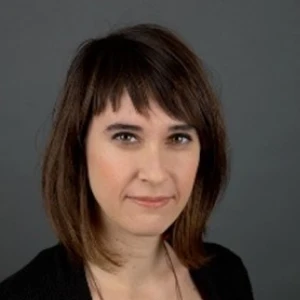
Giulia Inguaggiato
Giulia Inguaggiato is a philosopher with a background in medical ethics and research integrity. She is Assistant Professor at the department of Ethics Law and Humanities, Amsterdam University Medical Centers (Amsterdam UMC). Her research focus lies in exploring the intersection between philosophical ethical reflection and the practice of moral reasoning and in ethics education, health care and research.
Living ethics is a way of understanding what ethics is – an approach that recognizes living as an inherently moral endeavour. It serves to remind us of the intersubjective nature of ethics and encourages us to make ethics the object of a democratic and inclusive process of inquiry.
/
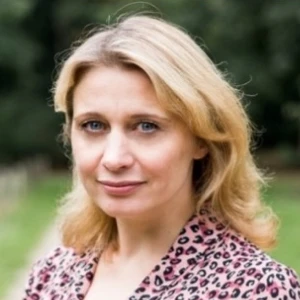
Suzanne Metselaar
Suzanne Metselaar is an ethicist and senior researcher at Amsterdam University Medical Centers. She obtained her PhD degree in Philosophy at the VU University of Amsterdam. Presently, she leads the research program Ethics of Palliative Care & End of Life at the Department of Ethics, Law and Humanities. Especially, she focuses on providing, developing and studying clinical ethics support instruments that help professionals to navigate their moral challenges themselves, in order to improve the quality of patient care and to promote their own (moral) resilience. She also publishes on clinical ethics theory and methodology.
I envision Living Ethics as an approach to bioethics that fosters processes of joint moral learning among bioethicists and diverse groups within society, so as to transcend beyond the distinction between academic bioethics expertise and the experiential expertise of those that live the realities in which moral challenges arise.
/
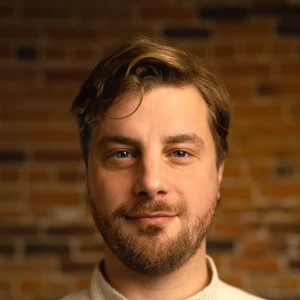
Félix Pageau
Dr. Félix Pageau (MD, M.A. philosophy, internist-geriatrician, ethicist, researcher) completed a master’s degree in philosophy in 2019. He is also a full researcher at the Center of Excellence in Aging in Quebec and at VITAM – Center for Research in sustainable health. Doctor Pageau is responsible for the Ethics and Health Axis of the Institute of Applied Ethics (IDÉA) at Laval University. He has been working as a geriatrician in Quebec City since 2021. His areas of study are end of life, futility, dignity, autonomy, medical assistance in dying, euthanasia, consent to care and robotics in geriatrics.
Living ethics encompasses various research methods aimed at adapting knowledge to evolving ethical situations facing humanity. Whether it is climate change, artificial intelligence, assisted reproductive technologies, or other contemporary challenges, we must adapt to flourish amid these ethical dilemmas. As a geriatrician, I strive to promote human flourishing until the end of life, even amidst dementia or other geriatric syndromes affecting individuals. This field explores how we can apply ethical principles to real-world scenarios, considering the complexities of life. It recognizes that society and technology advance pose new ethical questions.
/
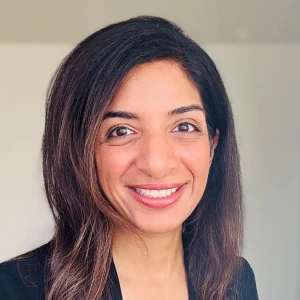
Manisha Pahwa
Manisha Pahwa is an Assistant Professor in the Trent/Fleming School of Nursing at Trent University. Her interests focus on the moral foundations of health policy in societies where there are a wide range of different values related to health and well-being. Dr. Pahwa’s research aims to investigate current ethical frameworks used in health policymaking, generate knowledge about ethics as it is lived and experienced in public health and health care contexts, and develop resources that support dialogue and the integration of moral diversity in health policy decision-making. Of particular interest are the ethical views, moral experiences, and moral contexts of groups with poor health outcomes, which are underrepresented in current ethical frameworks and principles. Dr. Pahwa’s long-term vision is to expand and enrich the scope of ethical frameworks which guide health policymaking, and thus contribute to a healthier, more just and flourishing society.
For Dr. Pahwa, ‘living ethics’ is the symbiotic relationship between lived experiences and how to live a good life. While some aspects of how to live a good life are consistent through time and space, such as having respect for all living beings, through lived experiences we can more fully understand the meaning of a good life and potentially expand and enrich this meaning as we go along. Living ethics offers a way to conceptualize this dynamic.
/
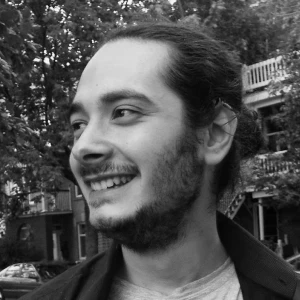
Gabriel Saso-Baudaux
Gabriel is a PhD student in practical philosophy at the University of Sherbrooke. His research interests cover the philosophy of science, political philosophy, social epistemology and the field of Science, Technology, Society (STS). He is particularly interested in the relationship between science and politics, which he studies in his PhD on scientific advice. More broadly, he is interested in the place of expertise in democratic societies, both scientific and lay expertise.
In the living ethics stance, I see a promising tool to help us think about the place of expertise and experts-based decision-making in democratic societies. In a time when the authority of experts is being challenged – sometimes, justifiably so, but other times, less so – I also believe it can help us rethink what public trust in science should mean, and more effectively foster this trust. I also see living ethics as a lever for the rejuvenation of our struggling democracies, an issue which can only be resolved with both deep and widespread transformations to our societies.
Regular Members